
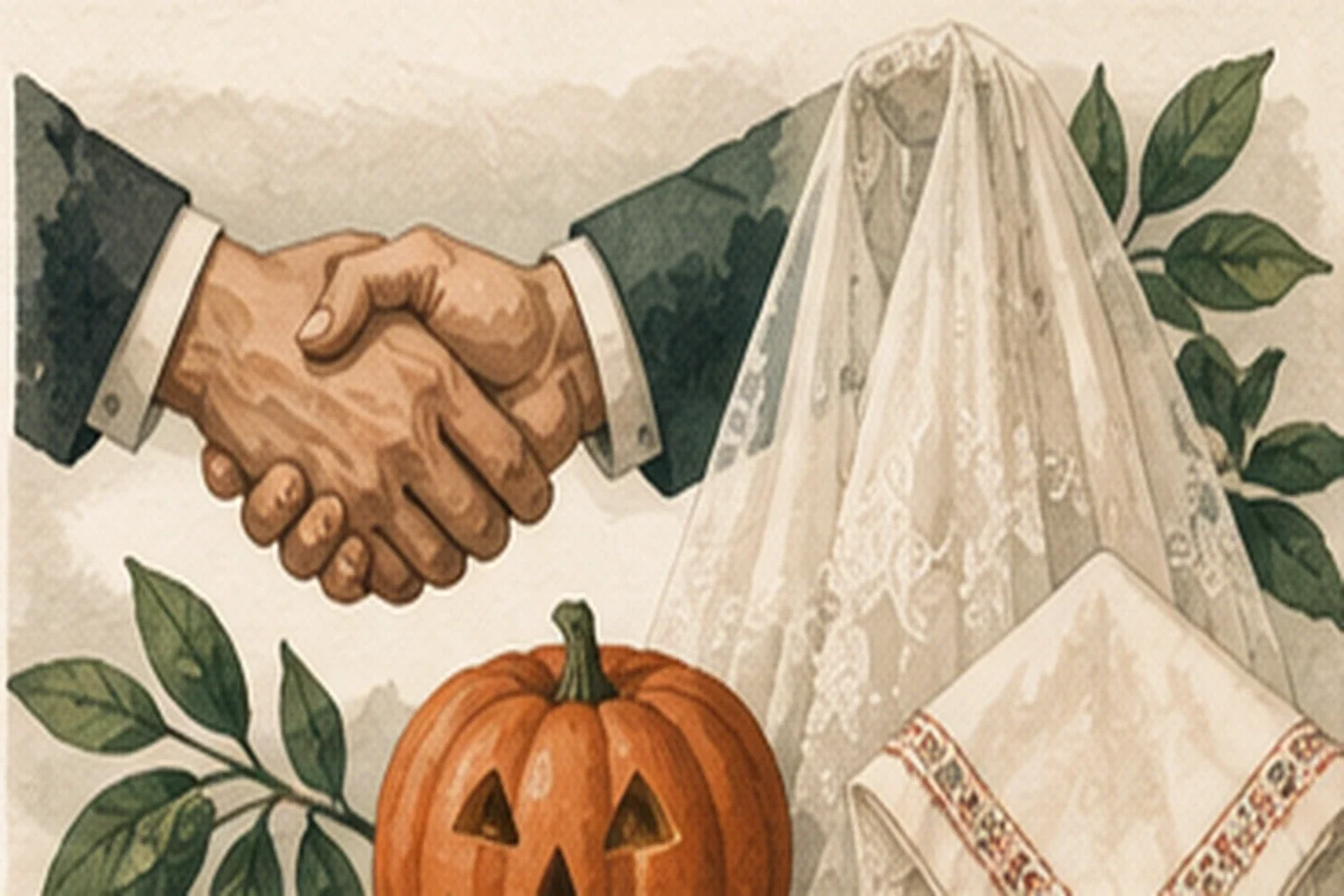
Key takeaways
- Many customs that feel timeless are younger than we think: the white wedding dress dates from 1840, and the phrase “trick or treat” from the 1920s.
- Others are older than the explanations given for them: Romans greeted sneezes long before the plague story usually told about “bless you”.
- Customs change their meaning while keeping their form; the gesture survives, and new reasons are attached to it.
- Popular origin stories often turn out to be later inventions, told to explain a habit people already had.
- Each article here separates what the record shows from what tradition says.
Customs and traditions are the things we do without asking why: saying “bless you” when someone sneezes, shaking hands, wearing white to a wedding, going door to door on Halloween. Each has a history, and it is rarely the one we have been told. Some customs are far older than their explanations; others are far younger than they feel.
The customs of other cultures are easy to notice. The most surprising ones are often our own, because we never think to question them. This section looks at a few of them closely.
Old forms, new reasons
A custom is a form that outlives its reasons. People keep doing something because their parents did, and when someone asks why, an explanation is supplied. Over centuries, the explanation can change completely while the gesture stays the same.
The blessing after a sneeze is a good example. Romans greeted sneezes in the first century; Christians turned the greeting into a blessing; later generations explained it with stories about souls escaping, devils entering or hearts stopping. None of these explanations is the origin. They are reasons people gave themselves for something they were already doing.
The articles in this section
Why Do We Say “Bless You”? Greeting a sneeze is an ancient custom recorded by Pliny the Elder in the first century. The famous story about Pope Gregory and the plague of 590 has no evidence behind it.
Why Do Brides Wear White? For most of history, brides wore their best dress in any color. Queen Victoria’s wedding in 1840 made white fashionable, and white was a sign of wealth long before it was a sign of purity.
The Origin of Trick-or-Treating Medieval souling, Scottish guising and Halloween pranks came together in North America, where the phrase “trick or treat” first appeared in Canadian newspapers in the 1920s.
Why Do We Shake Hands? The handshake has sealed agreements since at least the ninth century BC. As an everyday greeting between equals, it owes much to the Quakers.
Older or younger than you think?
| Custom | Common belief | What the record shows |
|---|---|---|
| Saying “bless you” | Began with a pope during a plague in 590 | Romans already greeted sneezes in the first century |
| White wedding dress | An ancient symbol of purity | Fashionable after 1840; standard only in the 20th century |
| Trick-or-treating | An ancient Celtic ritual | Older customs, but the phrase dates from the 1920s |
| Shaking hands | Began to show you had no weapon | Seen as a sign of agreement since the 9th century BC |
How customs travel
Customs move with people. Halloween traditions crossed the Atlantic with Irish and Scottish immigrants and changed shape in North America. The white wedding dress spread from a royal wedding to wealthy brides and, eventually, to almost everyone in the West. The handshake moved from treaties between kings to the greeting of strangers.
At each step, the custom adapted to its new setting. That is why the same ritual can look ancient in one place and recent in another, and why its “true” meaning is often impossible to fix.
Why it matters
Knowing where a custom comes from does not mean we should stop following it. It means we can follow it knowingly. “Bless you” becomes a small act of kindness with two thousand years behind it. The white dress becomes a choice rather than a rule. And the next time someone offers a confident origin story, it is worth asking where it was first written down.
Customs are only one part of what this site explores. You will find the same approach applied to dishes in Famous Foods, to the things we use every day in Everyday Objects, and to accidents and discoveries in Inventions & Discoveries.
Frequently asked questions
What is the difference between a custom and a tradition?
The words overlap. A custom is usually a habitual practice, like greeting a sneeze; a tradition is a custom passed down over generations and often tied to an occasion, like a wedding or a holiday.
Are most traditions very old?
Not always. Some are ancient, such as greeting a sneeze, but others feel old and are surprisingly recent, such as white wedding dresses and the phrase “trick or treat”.
Why do customs have so many origin stories?
Because people keep customs long after they forget why, and new explanations are supplied over time. Many popular origin stories appeared long after the custom itself.
Where can I check the origin of a custom?
Look for the earliest written record of the practice and compare it with the date of the story told about it. Each article here lists its sources.