
Short answer
Why do we say “bless you” when someone sneezes? Because greeting a sneeze is one of the oldest polite customs we have. The Romans already did it, and Pliny the Elder wondered why. The Christian phrase came later and replaced older wishes for luck and health. The popular story that it began with a pope during a plague is not supported by evidence.
Key takeaways
- Responding to a sneeze is an ancient custom: Pliny the Elder asked why Romans did it in the first century AD.
- In ancient Greece, a sneeze could be read as an omen; Xenophon records one taken as a good sign from the gods.
- The popular story that Pope Gregory I began the custom during a plague in 590 has no evidence behind it.
- In English, “God bless ye” after a sneeze is recorded in the 17th century.
- The old ideas behind it, such as the soul escaping or the heart stopping, are folk beliefs; a sneeze does not stop the heart.
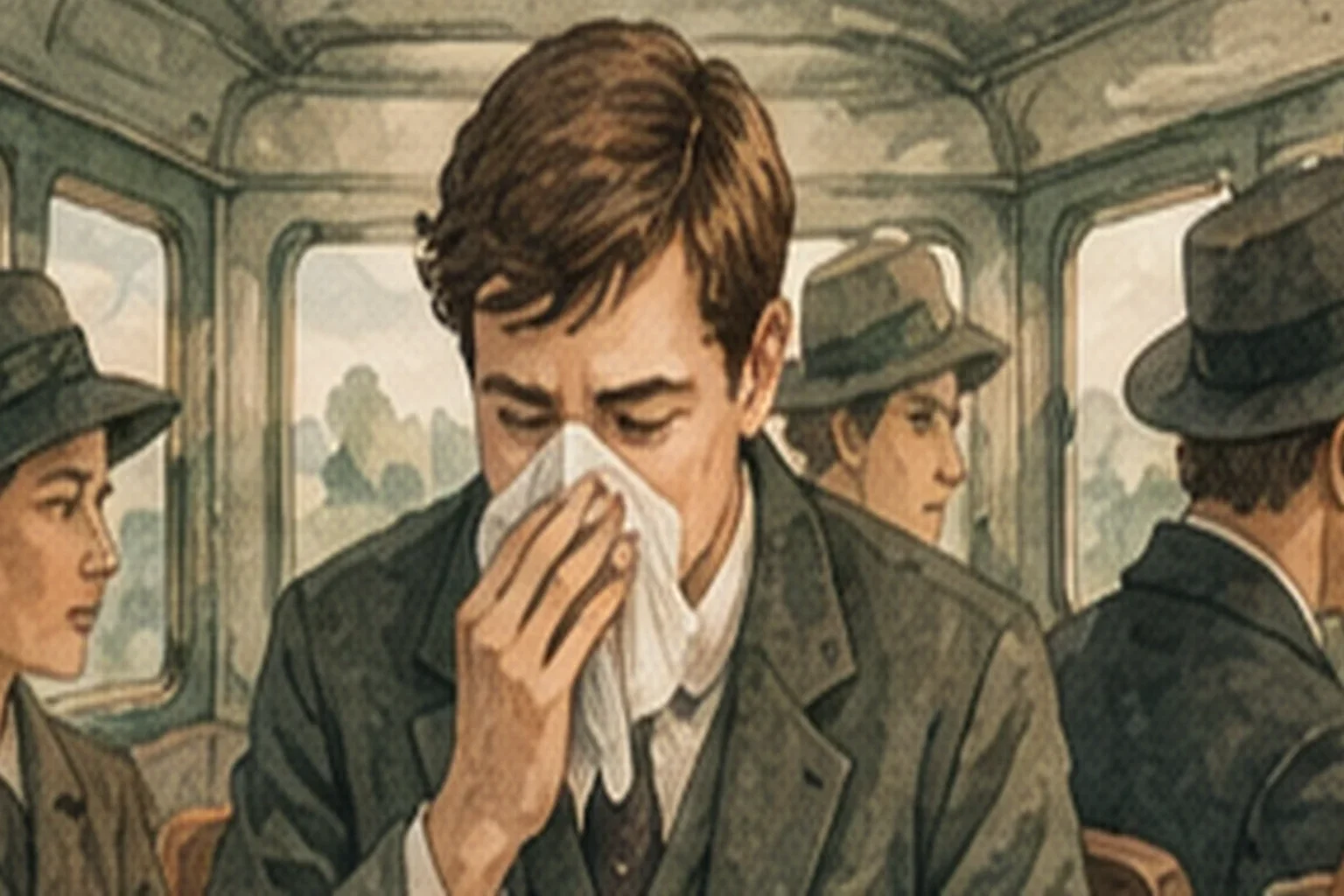
It is one of the few customs almost everyone follows without thinking. A stranger sneezes on a train and someone says “bless you”, although nobody in the carriage could explain why. The explanation most people have heard is dramatic, and probably wrong.
The story everyone tells
The usual version goes like this. In 590, a plague struck Rome. Gregory, who was about to become Pope Gregory I, ordered prayers and processions, and because sneezing was thought to be a sign of the disease, people were told to bless anyone who sneezed.
It is a tidy story, and it is still repeated in books and articles. The trouble is the evidence. Gregory did lead prayers and processions during the plague of 590, according to the Catholic Encyclopedia, but researchers who have looked for a link between him and the sneeze blessing have found none. Some versions even name the wrong pope, Gregory VII, who lived nearly five centuries later.
The more interesting problem is that the custom was already old by 590.
What the Romans did
Writing in the first century AD, Pliny the Elder included the question in his Natural History, in a section on prayers and charms for good fortune: “Why is it that we salute a person when he sneezes?” He added that the emperor Tiberius, whom he called the most unsociable of men, insisted on being greeted when he sneezed, even while riding in his chariot.
Pliny does not record the exact words, and scholars have suggested a greeting such as salve, “be well”. In the Satyricon, a Roman novel attributed to Petronius, a character greets a sneeze with a similar formula. Whatever the words, the idea was the same as ours: a sneeze called for a response.
Older still: the sneeze as an omen
In ancient Greece, a sneeze could be read as a sign from the gods. Writing around 400 BC, the historian Xenophon records a sneeze that was taken as a good omen at an important moment. A sneeze was not just a bodily event; it could mean something, and a response acknowledged it.
That helps explain why the custom spread so widely and lasted so long. Long before anyone thought of germs, people noticed that sneezing is sudden, involuntary and a little violent, the kind of event that invites explanation.
How it became a blessing
Christian Europe kept the habit and gave it Christian words. Not everyone in the Church approved: in the seventh century, Saint Eligius warned against “pagan” customs around sneezing, which suggests they were common and older than Christianity.
In English, the phrase is recorded in the 17th century. The antiquarian John Aubrey, writing in the 1680s, noted the custom of saying “God bless ye, Sir” after a sneeze. Thomas Browne, in 1646, discussed the belief that the custom came from a disease in which sneezing was fatal, which shows that people were already inventing origin stories for it.
The folk explanations
Over the centuries, different beliefs attached themselves to the custom:
- The soul could escape. A violent sneeze might throw the soul out of the body, and a blessing protected it.
- Evil could get in. The moment after a sneeze left a person open to the devil or evil spirits.
- The heart stopped. A sneeze was thought to stop the heart for an instant. It does not.
None of these explains where the custom began, since it is older than all of them. They are better understood as reasons people gave themselves for something they were already doing.
Record or legend?
| Claim | Status |
|---|---|
| Romans responded to sneezes, and Pliny asked why | Record |
| Tiberius demanded to be greeted when he sneezed | Record, reported by Pliny |
| Pope Gregory I started the custom during a plague in 590 | No evidence |
| “God bless ye” after a sneeze in 17th-century England | Record, noted by John Aubrey |
| The heart stops during a sneeze | False |
Why the custom survives
Saying “bless you” no longer has much to do with souls, devils or plague. It survives because it is a small, kind acknowledgment that costs nothing: you noticed, you wish the other person well, and the moment passes. Many languages have their own version, often a wish for health, which is probably closer to what the Romans meant than the phrase English settled on.
Another everyday gesture with a long and misunderstood history is the handshake. See Why Do We Shake Hands?, or the whole section at Customs & Traditions.
Frequently asked questions
Where did saying bless you come from?
Responding to a sneeze is an ancient custom recorded in Rome in the first century AD and in Greece before that. The Christian blessing replaced older wishes for health and good fortune.
Did Pope Gregory start saying bless you?
There is no evidence for it. Gregory led prayers during the plague of 590, but the sneeze custom is older, and no source connects him to it.
Does your heart stop when you sneeze?
No. The belief is old and may have reinforced the custom, but the heart does not stop during a sneeze.
Why did the Romans greet sneezes?
Pliny the Elder placed the custom among prayers and charms for good luck, which suggests it was seen as a way to turn a sudden, uncontrolled event toward good fortune.