
Short answer
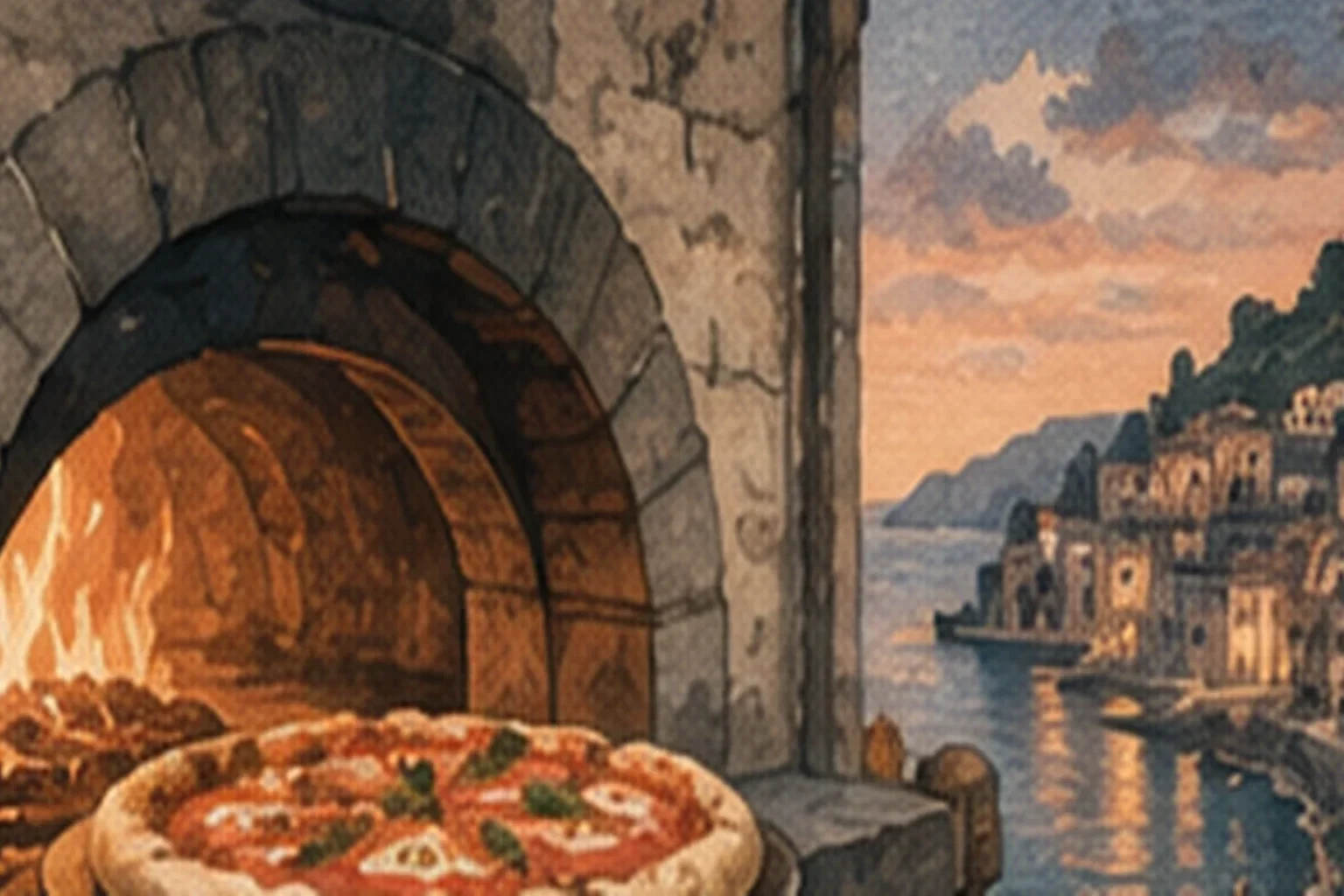
Who invented pizza? No one person did. Pizza grew out of the cheap flatbreads that street vendors sold to the poor of Naples in the 18th century. The best-known origin story, in which the pizzaiolo Raffaele Esposito created the Margherita for Queen Margherita of Savoy in 1889, rests on a single disputed letter and is probably a legend.
Key takeaways
- No single person invented pizza. It developed from flatbreads sold on the streets of Naples in the 18th century.
- The word itself is much older: it appears in a Latin document from Gaeta, in southern Italy, dated 997.
- The first pizzas were food for the poor, often topped only with garlic, oil, lard or cheese, and folded to eat on the move.
- The story of Raffaele Esposito creating the Margherita for Queen Margherita in 1889 rests on a single letter that historians doubt.
- Pizza stayed almost unknown outside Naples for more than a century; emigrants carried it to America, and it came back to the world from there.
It is one of the most eaten dishes on earth, and yet the honest answer to “who invented it” is a crowd: generations of bakers and street sellers whose names nobody wrote down. The name we do remember belongs to a story that arrived late and is shakier than its fame suggests.
A word older than the dish
The word pizza appears in a Latin document from Gaeta, a town on the coast between Rome and Naples, dated 997. It records a payment of twelve pizzas due at Christmas and Easter. What those pizzas were is unclear. Flat breads baked with something on top are as old as bread itself, and nearly every Mediterranean culture had some version.
So the word existed for centuries before the dish we would recognize. What turned a generic flatbread into pizza happened in one city.
The food of the Neapolitan poor
In the 18th century, Naples was one of the largest cities in Europe, and many of its people lived with constant hunger. Few could cook a hot meal at home. Street vendors sold simple flatbreads that could be folded and eaten on the spot, sometimes topped with nothing more than garlic and oil. Historian Luca Cesari describes how the city’s poorest, the beggars known as the lazzaroni, relied on pizza to get through the day.
The classic topping was lard, cheese and basil. Tomato came later. The plant had arrived from the Americas in the 16th century, but when exactly it first went onto a pizza is uncertain, and claims conflict.
As a middle class grew, pizza moved indoors. A survey in 1807 counted 54 pizzerias in Naples, and the number doubled by the 1880s. Around 1830, pizzerias began offering tables where customers could sit and eat, instead of buying from a stand.
The queen, the flag and the letter
The story everyone knows goes like this. In June 1889, Queen Margherita of Savoy was staying in Naples and wanted to taste the food of ordinary people. The pizzaiolo Raffaele Esposito was called to the royal palace of Capodimonte and made three pizzas. The queen liked best the one topped with tomato, mozzarella and basil, the colors of the new Italian flag, and Esposito named it after her: pizza Margherita.
The evidence for this is a single letter, dated 11 June 1889, signed by the head of table services to the royal household and kept by the pizzeria that descends from Esposito’s. It says the pizzas “were found to be delicious.” No newspaper of the time reported the visit.
The historian Zachary Nowak examined the letter and found problems: the royal seal is in the wrong place, the signature does not match others from the royal household in Italian archives, and the letter says nothing about which pizza the queen preferred. He also found that tomato, mozzarella and basil had appeared together on pizza before 1889. The story and the name were promoted heavily in the 1930s and 1940s, decades after the supposed event.
None of this means the queen never ate pizza. A newspaper account reprinted in 1880 already described her trying it. It means the tidy story of an invention, a date and a patriotic flag is far less certain than the plaque on the wall suggests.
How pizza left Naples
For more than a century, pizza was virtually unknown outside Naples. It traveled with emigrants. Millions of southern Italians left for the Americas in the late 19th and early 20th centuries, and pizza went with them. In New York, Lombardi’s dates itself to 1905 and is usually called the first pizzeria in the United States.
After the Second World War, American soldiers who had fought in Italy came home with a taste for it, and pizza began its second life as an American food that eventually reached almost every country. In 2017, UNESCO added the art of the Neapolitan pizzaiolo to its list of the intangible cultural heritage of humanity, recognizing the craft rather than any single inventor.
Record or legend?
| Claim | Status |
|---|---|
| The word “pizza” appears in a document from Gaeta in 997 | Record |
| Pizza developed as street food in 18th-century Naples | Record |
| Naples had 54 pizzerias in 1807 | Record, from a survey of the time |
| Raffaele Esposito invented the Margherita for the queen in 1889 | Legend, based on one disputed letter |
| The Margherita’s colors were chosen to honor the Italian flag | Legend attached to the 1889 story |
| Lombardi’s in New York was the first US pizzeria, in 1905 | The pizzeria’s own date, widely repeated |
Why the legend survives
Origin stories need a person, a place and a moment. “Generations of poor people in a crowded city slowly made something good out of very little” is truer, but it is hard to put on a menu. A queen, a skilled pizzaiolo and a flag make a better story, and Naples has every reason to keep telling it.
The real history is the more remarkable one. A food made by and for people who had almost nothing became one of the most popular dishes in the world, and it carries the name of no inventor at all.
The other dishes in this section have their own disputed fathers. Tiramisu is claimed by two regions at once, as you will see in Who Invented Tiramisu?. For the wider picture, start at Famous Foods.
Frequently asked questions
Who actually invented pizza?
No single person. Pizza developed from flatbreads sold by street vendors to the poor of Naples in the 18th century, and the bakers who shaped it are anonymous.
Did Raffaele Esposito invent the pizza Margherita?
That is the popular story, set in 1889, but it rests on a single letter whose authenticity historians question, and pizzas with tomato, mozzarella and basil existed before that date.
When was the word pizza first used?
It appears in a Latin document from Gaeta, in southern Italy, dated 997, which records a payment of twelve pizzas.
When did pizza come to America?
With Italian emigrants in the late 19th and early 20th centuries. Lombardi’s in New York dates itself to 1905, and pizza spread widely after the Second World War.